What actually breaks in an agency
Leads arrive from listing sites, Instagram, boards and referrals, then scatter across chats. One agent is on a viewing while a colleague calls the same buyer. Contract dates and post-visit follow-ups stay on paper.
A search for “real estate CRM” usually wants one place for people, visits and deals — not necessarily a database of unit size and orientation.
- Leads bounce between agents with no owner.
- Visit outcomes are not logged, so follow-up goes cold.
- Managers cannot see who is moving the pipeline.
- When an agent leaves, the notebook leaves too.
A practical property pipeline
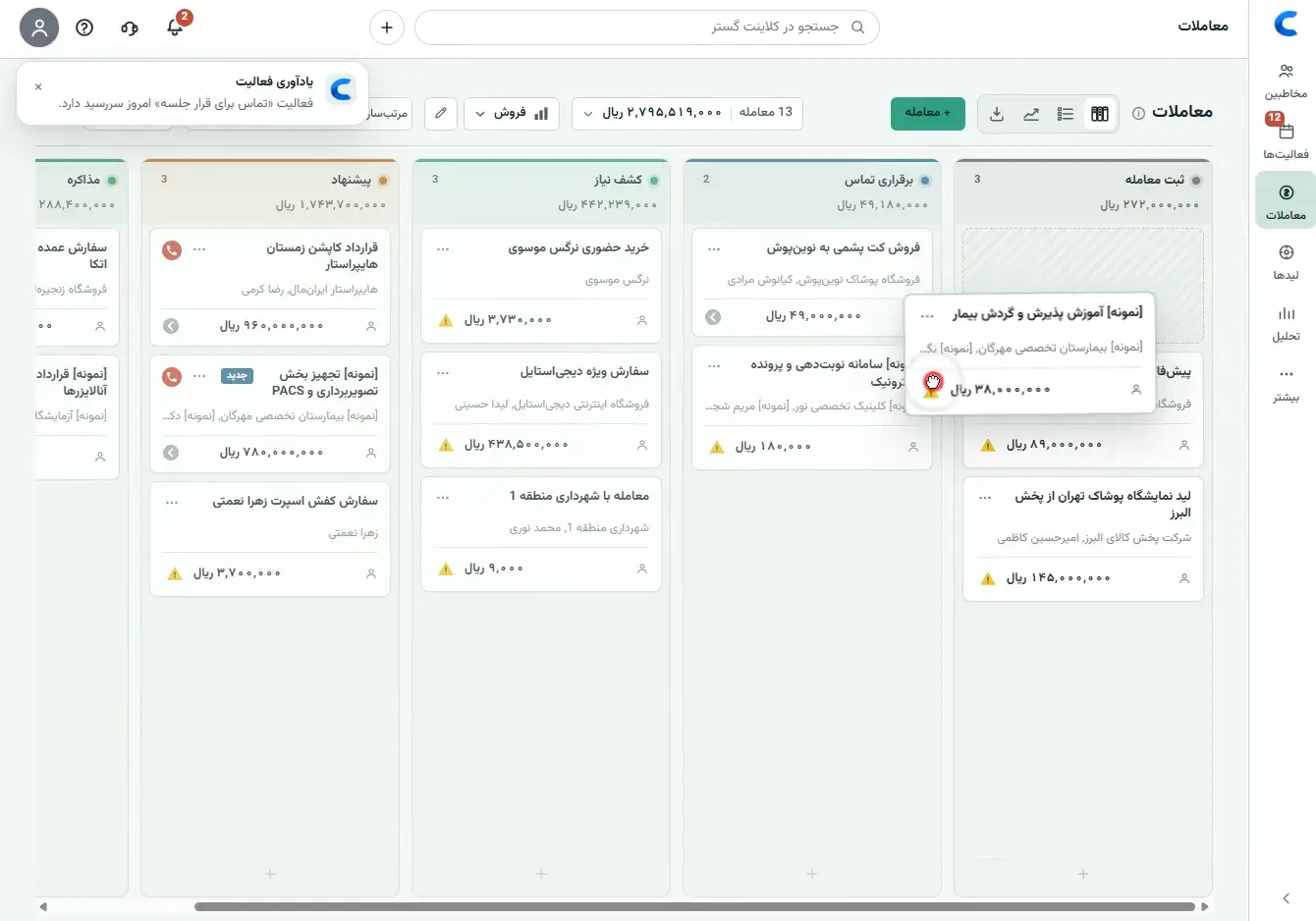
Keep stages short and real. A stage nobody understands stays empty. For most agencies this path is enough.
- New lead: listing site, Instagram or referral.
- Qualification: budget, area, buy or rent, timing.
- Viewing booked.
- Negotiation / offer.
- Sale or lease agreement.
- Won or lost is a deal status, not a separate pipeline column; always add a reason.
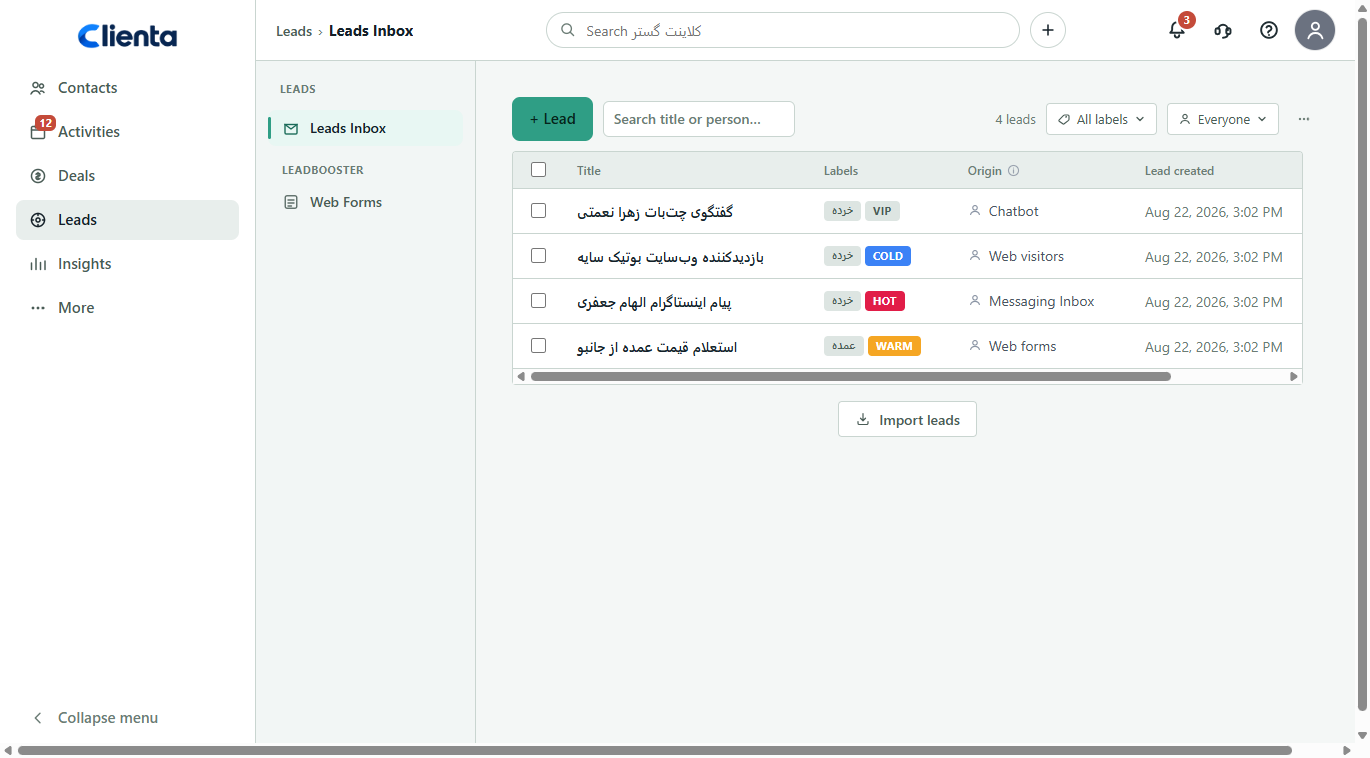
Do not lose the lead before the viewing
Log every call the same day: source, neighbourhood, budget and the owning agent. Simple qualification tags stop you spending viewing time on cold buyers.
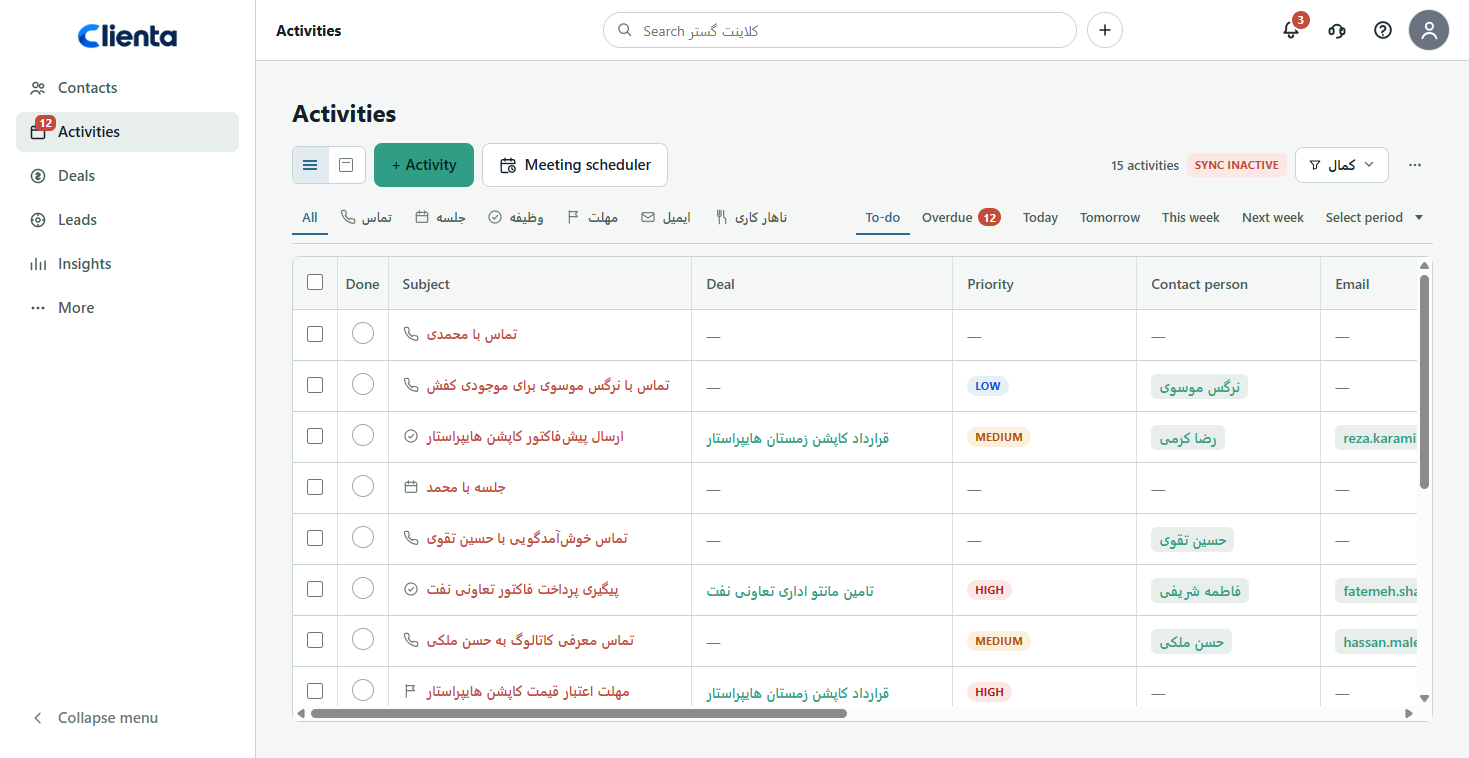
A viewing without follow-up is a burned opportunity
After a viewing, write the outcome on the customer record and schedule the next call. Automation is enough for post-visit reminders or stalled deals — you do not need a complex workflow.
Agents are not at a desk
Viewings, contract meetings and calls on the road get logged in the mobile app. If logging waits until the office, WhatsApp becomes the source of truth again.
What real-estate CRM is not
Clienta is not a listing database, a live listing-site sync or a title office. You can keep a file as a deal or a note on the customer record, but do not expect an MLS or ad search engine. The product’s value is following people: buyer, seller and owning agent.