Solution for field teams
CRM software for distribution and field sales
If a rep writes visit outcomes back at the warehouse, the data is already a lie. The shop list lives in Excel, follow-up promises live in memory, and the supervisor takes a verbal report at night. Field-sales CRM means route customers, today’s work and visit results live on the phone so the relationship outlives any one person. This page is for teams that need relationship follow-up — not a replacement for Sepidar distribution order-taking, GIS routing or a hot/cold van ERP.
The real pain for Iranian field sales and distribution
Routes sit in Excel, orders sit in messages, collections sit with a supervisor, and the reason for no sale lives only in the rep’s story. When a rep leaves, the route relationship leaves too. Supervisors cannot see which shops have not been visited in weeks, and the sales meeting runs on verbal reports — not field logging.
Searches for “field sales CRM” or “distribution CRM” mix two needs: order-taking, stock and GPS tours on one side; customer follow-up, today’s work and visit history on the other. Clienta is the second layer. Keep the first in your distribution system.
- Visits without a logged outcome get repeated or forgotten.
- No-sale reasons (full stock, price, absent buyer) are never recorded.
- Supervisors cannot see dormant customers or uncovered route stretches.
- When a rep leaves, route memory leaves too.
- Sales is detached from accounting, so customer mismatches pile up.
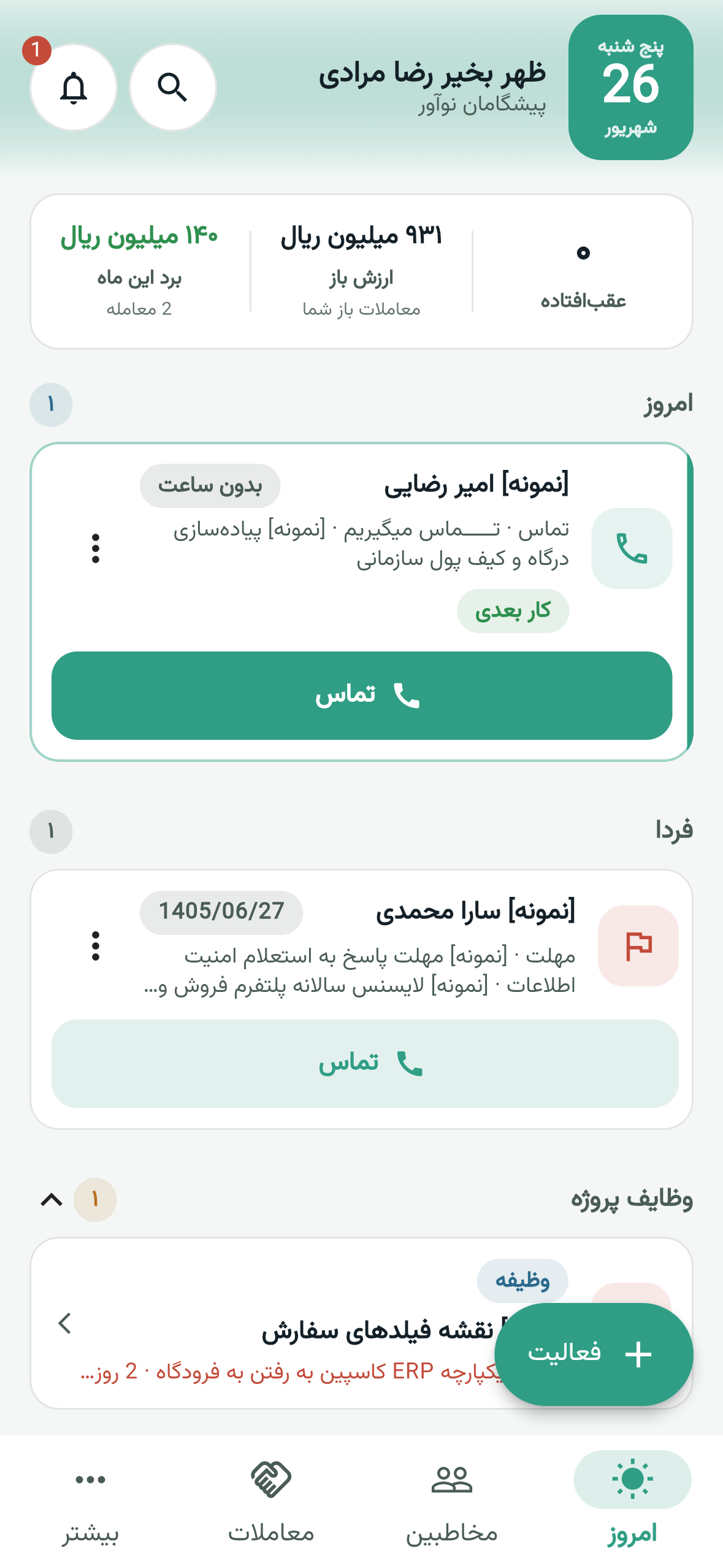
Today’s work has to be on the phone
Field-sales research repeats one rule: capture happens on site, not as a late-night reconstruction. The Clienta mobile app shows the same contacts, deals and activities as the web app. Before walking in, the rep sees the last touch; after walking out, the outcome is logged immediately.
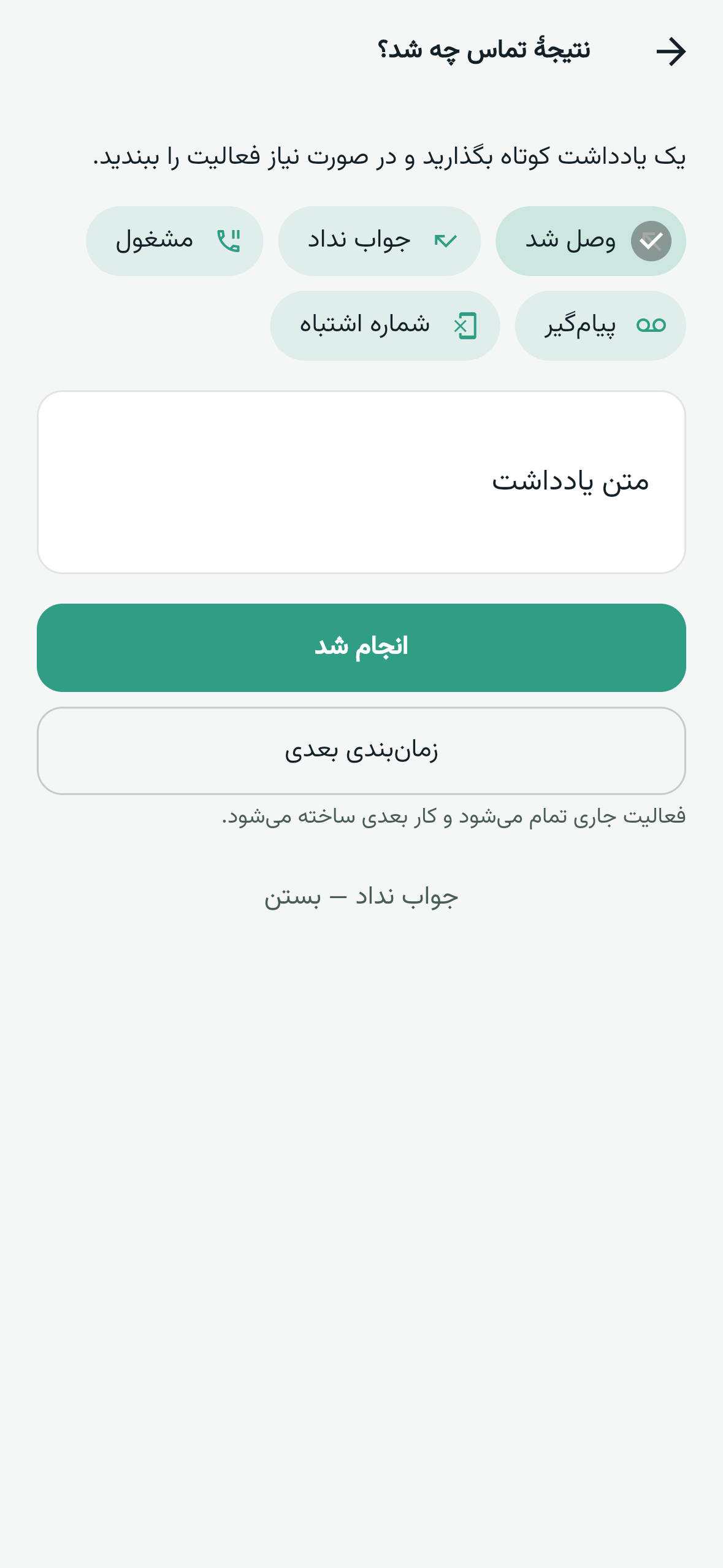
Log the visit outcome and no-sale reason on the spot
Every stop needs three things: the outcome (order, promise, no sale), a short reason if nothing sold, and a next action with a date. Distribution playbooks also stress no-order reason codes so supervisors know whether the issue is price or coverage. Do not make the form long — the rep should finish in under a minute and move on.
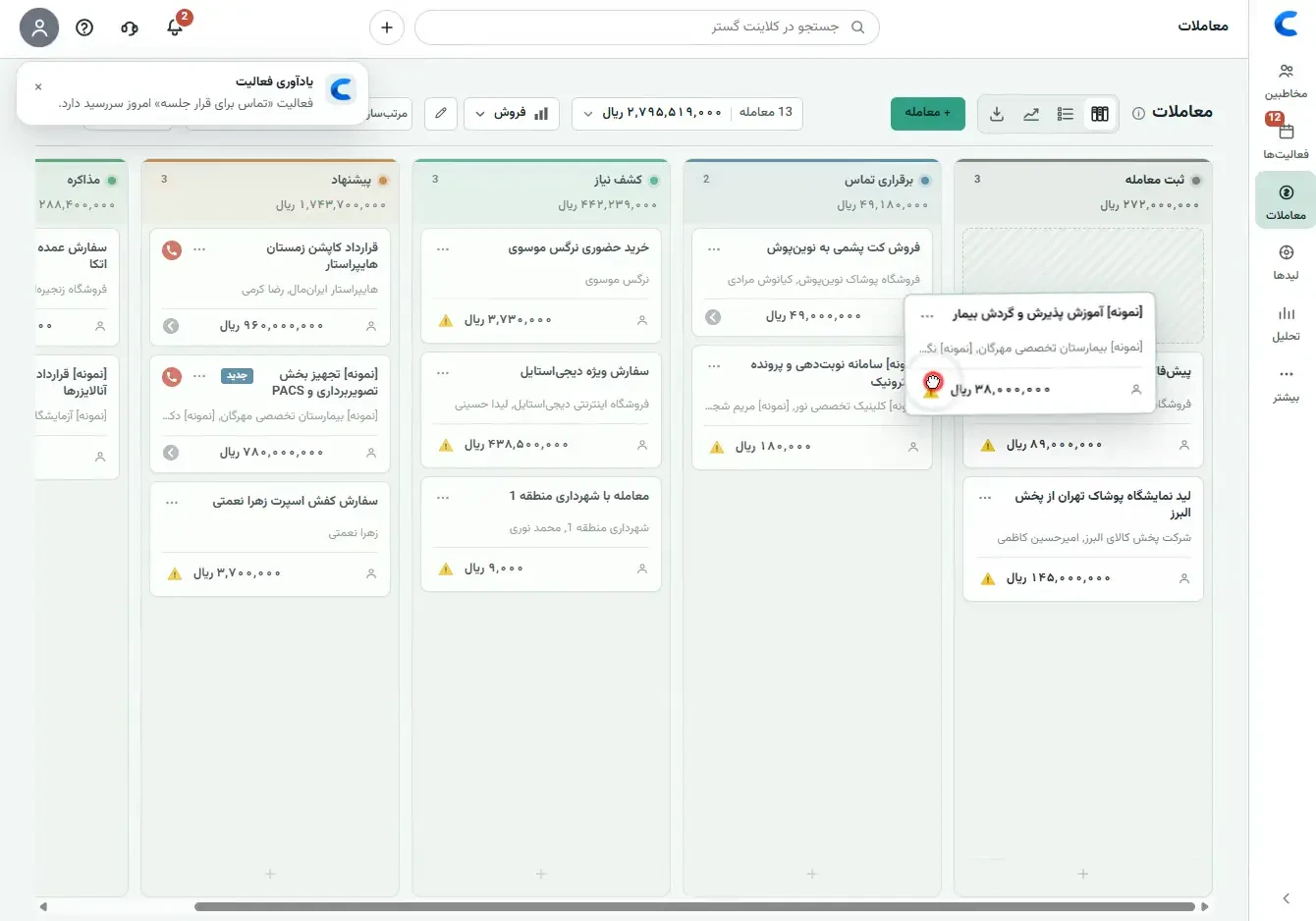
A pipeline for new route accounts, not only today’s order
Use a short pipeline to win a new shop or account. For active customers, keep recurring visits and promised follow-ups as activities on the same record so the sales pipeline does not mix with retention work.
- Route, referral or territory lead.
- First visit and qualification.
- Sample / terms and credit negotiation.
- First order.
- Active — retain with a next-visit activity.
Find dormant customers before you lose them
Supervisors should see which customers have had no activity or visit for weeks — not ask the rep’s memory at month-end. When today’s work and the last follow-up date sit on the record, route coverage and visit priority come from data, not a morning spreadsheet.
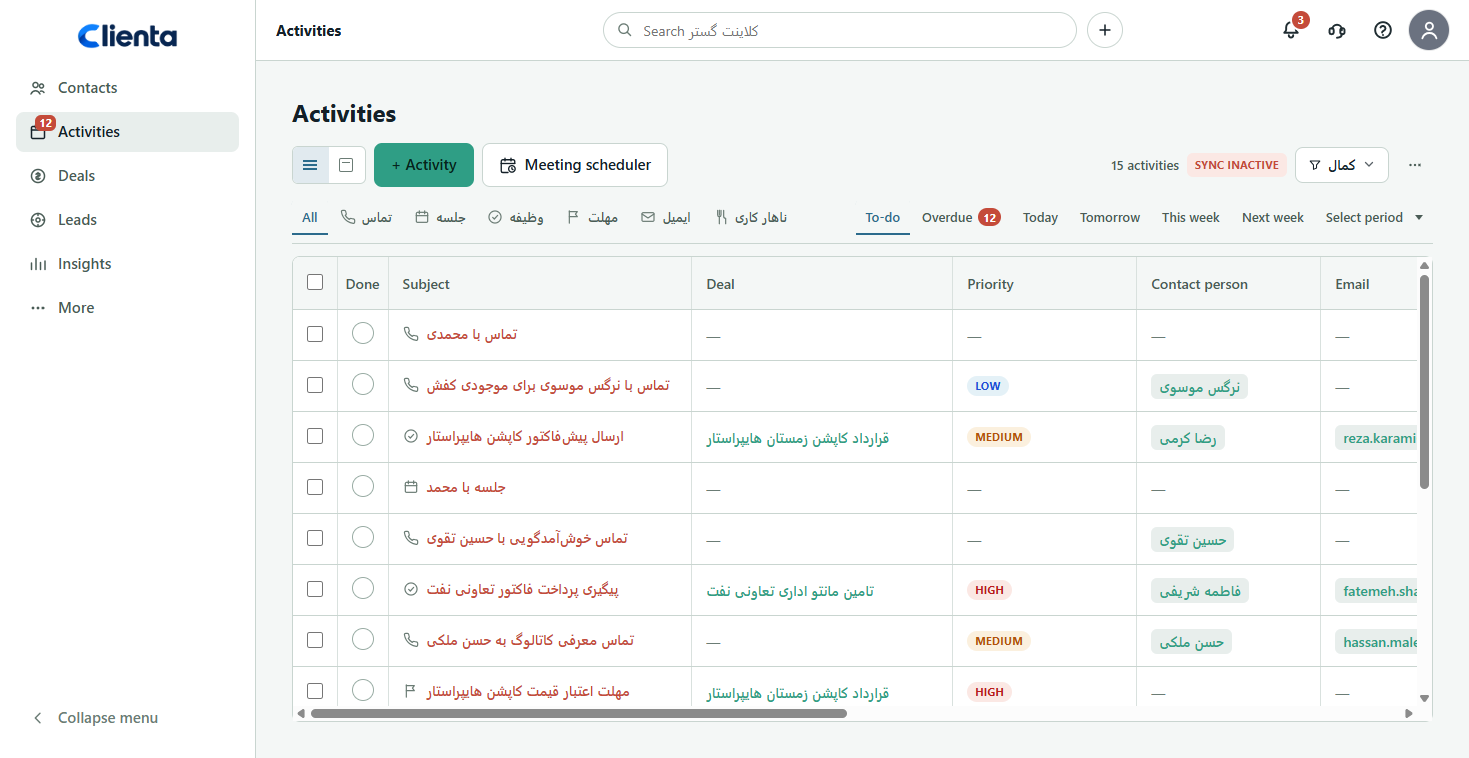
Supervisors should see the route, not private notebooks
Permissions and visibility groups let each rep see their own customers while a supervisor sees the region. Activity reports show whether visits were logged or only talked about, so the daily supervisor meeting is no longer tied to a paper form.
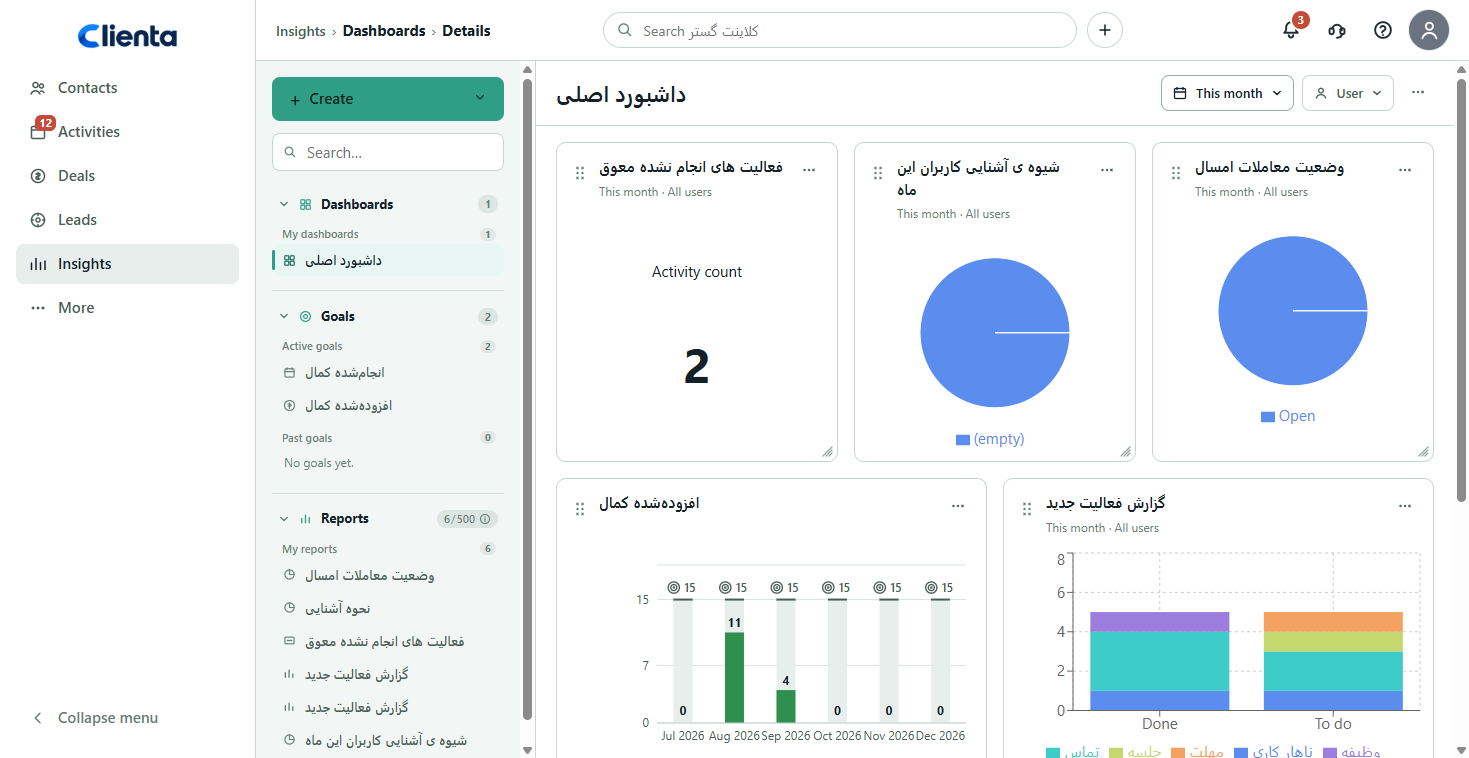
If you already run Sepidar for finance or distribution
Many Iranian distributors keep finance and order-taking in Sepidar. Clienta is sales CRM and can connect to Sepidar so the customer and sales follow-up stay aligned. Expect hot/cold order-taking, GPS tour planning, van inventory and delivery lists from Sepidar’s distribution module — not from Clienta.
What distribution CRM is not
Clienta is not van-sales software, offline order-taking with catalog and stock, delivery-van management, GIS routing, fleet tracking or complex route commission. If operations and van invoicing are the gap, buy a distribution system. If the gap is lost customer follow-up, visit outcomes and the team’s daily sales work, sales CRM is the right layer.
Pilot one route
Pick one rep and one territory, import those customers, and ban visits without an outcome and next action. For two weeks run the supervisor meeting only from system activities. A 14-day free trial is enough to see whether on-site logging becomes a habit; then add the other routes.