ClientaHesabfa

Sales in Clienta · Official documents in Hesabfa

CRM for businesses that already run Hesabfa

Hesabfa CRM

Run sales in Clienta. Keep accounting in Hesabfa.

Hesabfa is strong at cloud accounting, invoices, light inventory and tax e-invoicing. What is usually missing is the sales layer: where the lead came from, which stage the deal is in, who to call today, and whether the salesperson can see credit and stock without opening Hesabfa again.

Clienta is a Hesabfa CRM in the practical sense: it runs pipeline and follow-up, then uses the marketplace connector so catalog, parties, balances and invoices reach Hesabfa. The point is not to replace the ledger — it is to enter sales once and post the document in finance. The connection is cloud-to-cloud: two API keys, no dongle and no Windows agent.

  • Hesabfa app in the marketplace is free
  • Salespeople stay out of Hesabfa
  • No Windows agent required
Clienta pipeline: the CRM layer before a Hesabfa document is posted

Two systems, one flow

Hesabfa is accounting. CRM is selling.

Almost every Iranian business that runs Hesabfa keeps sales somewhere else: Excel, WhatsApp, a salesperson’s memory or the accounting panel itself. The pain starts when those worlds are not connected. Clienta organises selling and sends the same data to Hesabfa for the official document.

In Clienta

Customer relationships and sales

Leads, people, companies, activities, the deal pipeline, quotes and sales invoices live here. A salesperson works the day without opening Hesabfa.

  • Pipeline with the next action on the card
  • Customer record with calls, notes and deals
  • Quotes and invoices on the same opportunity
  • Mobile apps on the same web account

In Hesabfa

Cloud accounting, stock and the official document

Sell prices, stock, credit limits, parties and tax invoices stay the source of truth. Finance owns the document. Clienta does not become the ledger.

  • Sellable items sync from Hesabfa
  • Balance and credit appear on the customer
  • Issued invoices become Hesabfa documents
  • Official invoices lock in CRM after send

The pain everyone recognises

If you have Hesabfa and still no CRM, these five signs are familiar.

Hesabfa’s own CRM-integration pages and Iranian competitors list the same symptoms. They show up faster here because the business is smaller and the salesperson often posts the invoice in accounting themselves.

Customer data in sales and finance does not match

Name, mobile, national ID or economic code in the sales spreadsheet differs from the Hesabfa contact. When the invoice arrives, finance retypes it or the document fails.

Sales has to open Hesabfa for a balance

Without live credit, a salesperson closes a credit deal and finance objects later — or they leave CRM and post the document in Hesabfa.

The sale is done; the official invoice is late

The quote sits in Word, the message in WhatsApp, and the same lines are re-entered in Hesabfa tomorrow. The customer wants the document today.

Double entry wastes time and creates errors

Item code, quantity, discount and tax are typed twice. One digit off means stock mismatch, conflicting reports and a bounce back to sales.

Sales reports do not match finance reports

Management sees pipeline in CRM or Excel and collections in Hesabfa. Two conflicting numbers mean a meeting that cannot decide.

What a Hesabfa CRM has to deliver

Clienta completes the sales layer. It does not rebuild cloud accounting.

Pipeline before the invoice

Leads and deals stay in Clienta. When an opportunity is won, the invoice is built from those lines — the path does not disappear into a spreadsheet.

Balance and credit on the record

Sales sees Hesabfa credit and outstanding balance in Clienta. They do not message finance or open Hesabfa before closing a credit deal.

Stock from the Hesabfa catalog

Items come from accounting. Quantity is Hesabfa stock. Selling on a paper number or a free-hand price stops.

Official invoices with a clear role

Sales can raise a quote. Sending the official invoice can stay with the workspace admin. A tax document is not a team-wide button.

Salespeople do not get Hesabfa

You do not buy extra Hesabfa seats or risk document edits. Selling stays in CRM. Finance keeps Hesabfa.

Cloud connection, no Windows install

Hesabfa is already on the internet. Two keys from finance settings are enough. No dongle, modem port or agent on the accounting PC.

Sales pipeline

See deal status instead of asking finance where the sale went.

Hesabfa shows posted invoices. It does not show a pipeline, overdue follow-ups or stage value. Clienta is the board for work that has not become an official document yet.

  • Stages that match your process
  • Deal cards with value, owner and next action
  • Turn a won opportunity into an invoice, not an Excel copy
Clienta pipeline: daily selling before Hesabfa

Quotes and invoices

From opportunity to document without retyping.

Build a quote on the deal, send it to the customer, then issue the sales invoice. With Hesabfa connected, the quote becomes a draft and the invoice becomes a confirmed document.

  • Quotes and invoices on the customer record
  • Lines from synced Hesabfa items
  • Official invoices lock in CRM after they are sent
Clienta invoices: the same document that can register in Hesabfa

Customer record

Keep financial balance next to sales history, not in another window.

Calls, meetings, notes and deals stay on the Clienta record. With Hesabfa connected, credit and outstanding balance sit on the same customer so negotiation uses real numbers.

  • Interaction timeline in CRM
  • Hesabfa contacts map to a person or company
  • Credit-limit warning before an invoice is posted
Clienta deal record: sales context before posting to Hesabfa

Marketplace

Hesabfa is a workspace app — install it, do not commission a custom project.

The Hesabfa connector is free in the Clienta marketplace. An admin adds it, pastes two keys and syncs items. Salespeople only see the result on invoices and records.

  • Add Hesabfa to the workspace in one admin click
  • Connect with an API key and login token; the owner password is never stored
  • Sync items every ten minutes or on demand
Clienta marketplace: Hesabfa beside SMS, Sepidar and WordPress

Mobile

Field sales should work from the same Hesabfa catalog.

Android and iOS are the same workspace as the web app. On the road, sales sees the customer and the deal and can call — they do not go back to the office for stock or wait for a photo of an invoice.

  • Today’s work, contacts and deals on the phone
  • The same account, not a separate dataset
  • Invoices and items when the plan and access allow
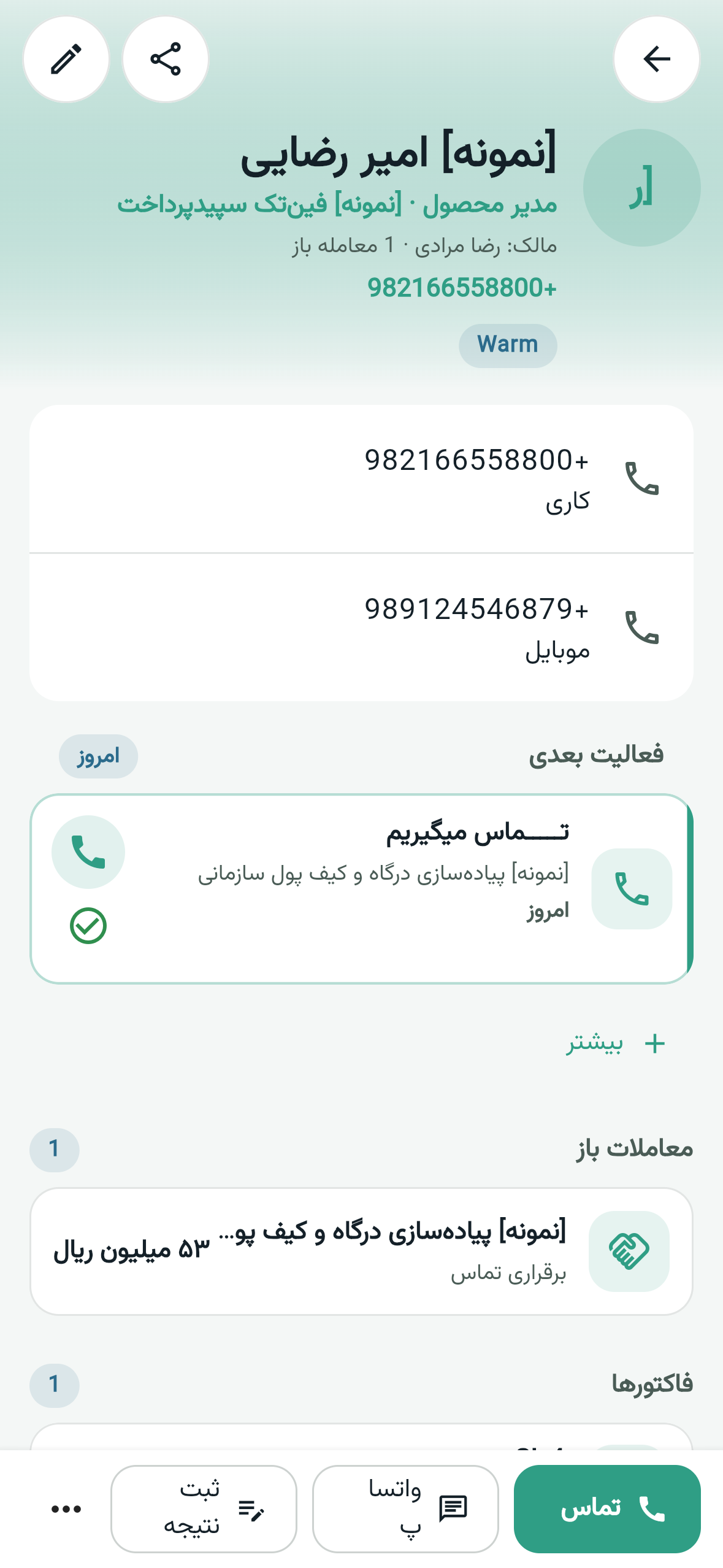
Clienta mobile app screenshot: customer record for a field seller using Hesabfa
Clienta mobile app: follow the customer outside the office

The flow

From lead to Hesabfa document, one clear path

This is the cycle Hesabfa teams want: sales decides in CRM, finance owns the document in Hesabfa, and management sees one story from both.

  1. 1

    Leads and opportunities in Clienta

    A lead arrives from a form, a call or a manual entry, is qualified and becomes a pipeline deal. This stage does not exist in Hesabfa and should not.

  2. 2

    A quote with Hesabfa items

    Lines come from the synced catalog. Price and stock come from accounting so the promise to the customer is real. In Hesabfa this document is a draft sales invoice.

  3. 3

    Issue the invoice in CRM

    After approval, the sales invoice is issued. A Clienta draft is not sent; only an issued document is the finance bridge.

  4. 4

    Send to Hesabfa

    An admin — or the role you configured — sends the invoice. The contact is created or linked if needed. If credit is exceeded, posting stops before the document.

  5. 5

    Finance keeps ownership

    The number and document live in Hesabfa. In Clienta the invoice locks. Official void or correction happens in accounting, not by deleting a sales card.

Architecture

Clienta is cloud software. Hesabfa is cloud software too.

Unlike on-premises Sepidar, Hesabfa is on the internet. The Clienta server talks directly to the Hesabfa REST API at api.hesabfa.com. No Windows agent, static IP or modem port. The API key and login token are stored only on the Clienta server; the business-owner password is never stored.

Clienta cloud

Sales, invoices and the marketplace. The API key and login token live only on the Clienta server.

Hesabfa REST

HTTPS to api.hesabfa.com. Rate limit 240 requests a minute. A unique request id stops duplicate invoices.

Hesabfa cloud

Contacts, items, stock, credit and confirmed invoices. Tax e-invoicing stays inside Hesabfa.

If a WooCommerce shop is already connected to Hesabfa, do not silently replace the change hook — Hesabfa allows only one hook URL. Clienta polling still works without the hook.

Finance card

Sales sees the balance in CRM, not in Hesabfa.

The Hesabfa finance card sits on the person, company, item and invoice. The point is that sales does not open accounting for stock and credit, and does not edit the document.

Product honesty

Hesabfa CRM means a sales bridge, not an accounting replacement.

What Clienta does for Hesabfa

  • Pulls active items and services from Hesabfa into the Clienta catalog.
  • Links a person or company to a Hesabfa contact, or creates one.
  • Sends an issued quote as a Hesabfa draft invoice.
  • Sends an issued sales invoice as a confirmed document.
  • Reads remainder, credit and stock for display in CRM.

Deliberately out of scope

  • It does not replace Hesabfa, the ledger or tax e-invoicing.
  • It does not create items in Hesabfa from inside Clienta.
  • It does not edit or delete an official invoice in CRM after send.
  • Warehouse transfers, sales returns and manufacturing are not in this version.
  • Multiple Hesabfa businesses on one workspace are not covered.

By role

Sales, finance and management each keep their job.

Salesperson

Pipeline, follow-up and quotes live in Clienta. They see balance and stock and stay out of Hesabfa. They do not wait on finance to print a quote.

Accountant / finance

The official document arrives from CRM with the right item and contact codes. Sales does not have Hesabfa. Turning a quote into an invoice can stay with an admin, because voiding a tax document has consequences.

Sales manager or CEO

Pipeline numbers are no longer a spreadsheet detached from Hesabfa. You do not hand every seller a Hesabfa seat, and sales versus collections become one story. Setup is usually under thirty minutes.

FAQ

Questions Hesabfa businesses ask before they pick a CRM

What is a Hesabfa CRM?

Hesabfa itself is cloud accounting software, not a full CRM. People searching “Hesabfa CRM” want a sales system that connects to Hesabfa: leads, pipeline and follow-up in CRM, and items, balances and official invoices in Hesabfa. Clienta is that sales layer and connects from the marketplace with two API keys.

Does Clienta replace Hesabfa?

No. Clienta is for selling. Hesabfa stays accounting and the official document. Items are created in Hesabfa, official invoices lock in CRM after send, and the ledger, tax e-invoicing and payroll are out of this connector. Tax e-invoicing stays inside Hesabfa.

How is Clienta different from Didar for Hesabfa?

Didar announced a free Hesabfa connection in June 2026: quotes and invoices in one click. Clienta also ships the connector free in the marketplace. The difference is real item sync from the API, remainder and credit on the customer record, and locking the official invoice after send. If you are choosing between the two CRMs, see the comparison page.

Do I need a Windows agent or a hardware lock?

No. Hesabfa is cloud software. Clienta connects with an API key and login token from Hesabfa finance settings. That is the difference versus on-premises Sepidar.

Do salespeople need Hesabfa access?

They should not. That is the point of the connector: selling stays in Clienta, Hesabfa seats and security stay with finance, and balance and stock are read-only in CRM.

What if WooCommerce is already connected to Hesabfa?

Hesabfa allows only one change-hook URL. Clienta polls by default and does not steal the shop hook. If you want a live hook, you must confirm the replacement on purpose.

Which Clienta plan includes Hesabfa?

The Hesabfa app is free in the marketplace for the workspace. Clienta itself has plans, and the 14-day trial is on Professional. Quotes and invoices are on current plans; see the pricing page for limits.

How long does setup take?

If the Hesabfa business is active and the API is on in finance settings, setup is usually 15 to 30 minutes. The business owner must create the keys; a salesperson usually cannot open that page.


Keep Hesabfa. Put selling in Clienta.

Try Professional for 14 days, add Hesabfa from the marketplace and send a test invoice to accounting. Finance and sales should sit in the setup session together.