
Solution for insurance agencies
CRM software for insurance agencies and brokers
An agency lives on renewals, referrals and new lines. If expiry dates live only in a spreadsheet or notebook, the client renews motor cover elsewhere and body, health or life opportunities disappear. Insurance CRM means the policyholder, the renewal date, the cross-sell gap and call history sit on one record — not that the software replaces the carrier’s rating and issuing system.
The real pain for Iranian insurance agencies
A scattered book of business, manual renewal reminders and calls buried in WhatsApp are the usual three reasons clients leave. The agent is on a claim visit or issuing and a colleague does not know who expires this week. Referral and Instagram leads also sit without an owner until a competitor or an online platform moves first.
Searches for “CRM for insurance agencies” usually want a policyholder file, renewal reminders, a new-business pipeline and cross-sell context — not a central issuing system, a rating engine or a specialised claims platform.
- Motor, body and health renewals get missed and renewal commission burns.
- Cross-sell (body on motor, life and fire on existing clients) never happens.
- Referral and ad source are unknown, so acquisition cost is guesswork.
- Promises, quote comparisons and claim notes do not survive staff changes.
- Several agents in one office collide on a client, or books of business mix.
Renewals are the agency’s income spine
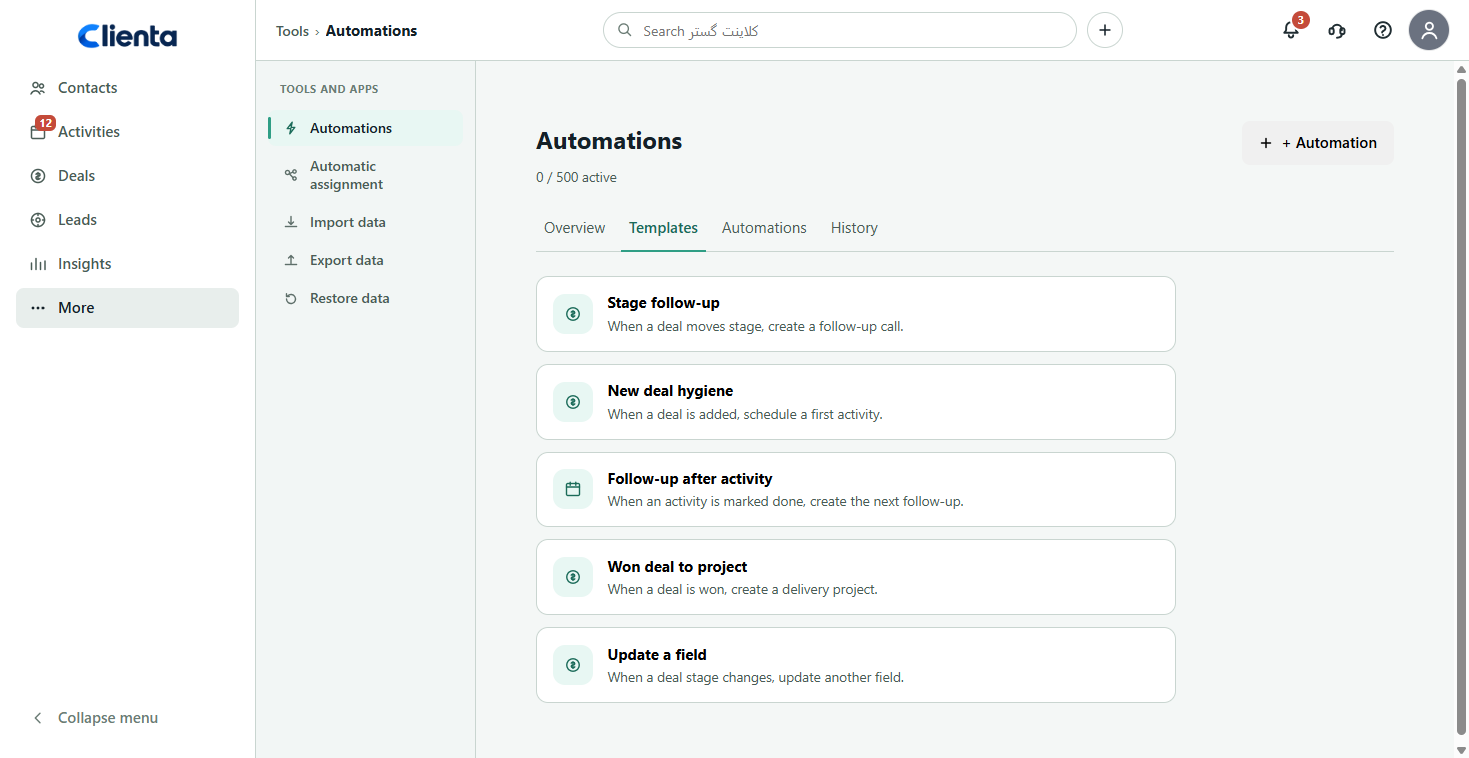
Most of a stable agency’s cashflow comes from annual renewals, not only first sales. Contact should be logged about two to four weeks before expiry — the same window insurance sales guides recommend. Put a dated activity on every policyholder, or let automation create a follow-up as the date approaches, so renewal is not trapped in one agent’s memory.
Treat a renewal as a separate deal or an activity on the same customer; what matters is that the date has an owner and a next action, and a second chase happens if the client stays quiet.
Cross-sell on the same policyholder
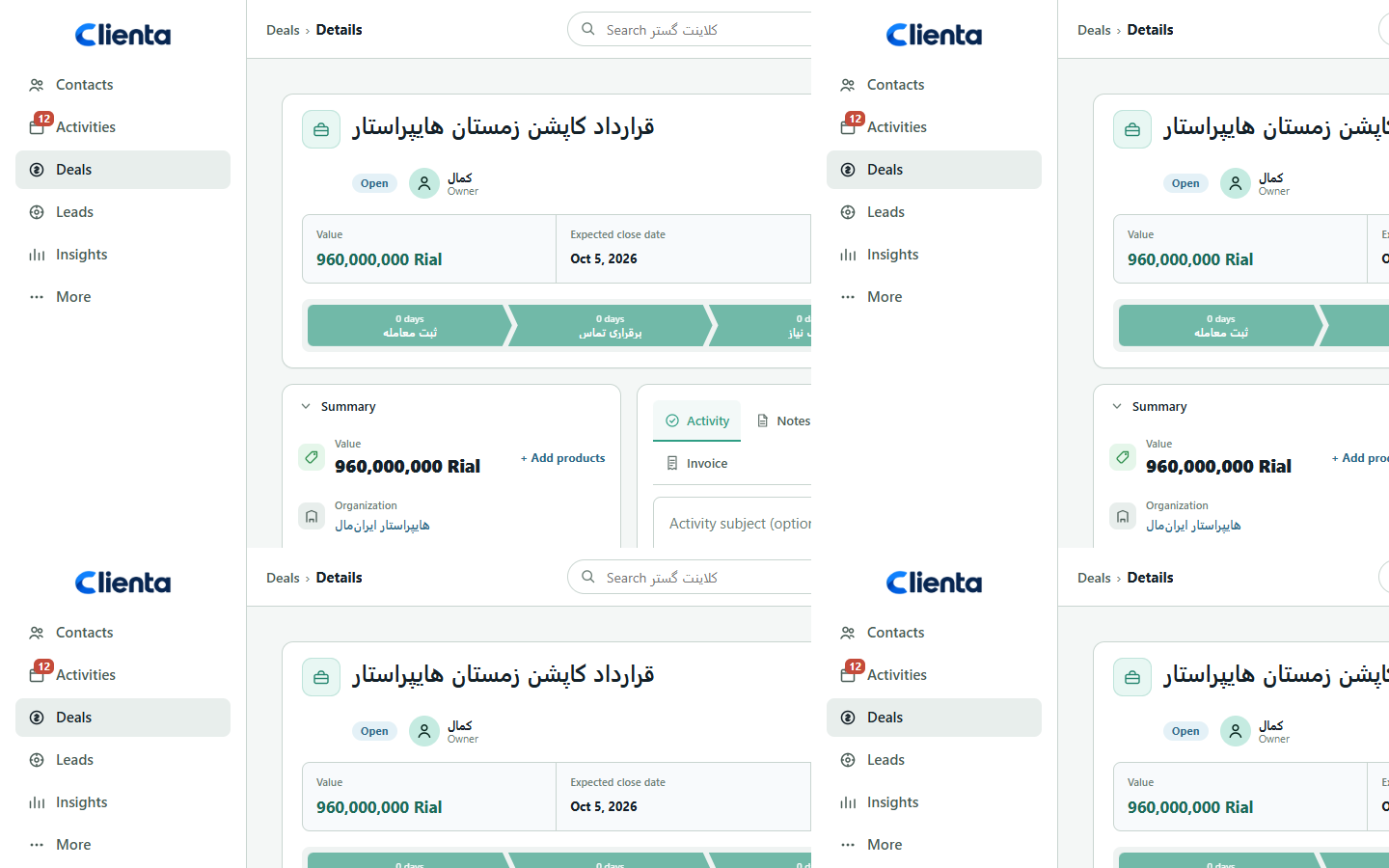
The cheapest growth is selling to existing clients: body after motor, family health or life on the household, fire and liability on property. Record which lines they already hold and which gaps remain so a renewal call is not only “same cover again” and the complementary offer has real context.
- Motor third-party → body and personal accident.
- Health or accident → family cover and life.
- Property fire → liability and theft.
- Near expiry → coverage review and upgrade (upsell).
A new-business pipeline for the agency
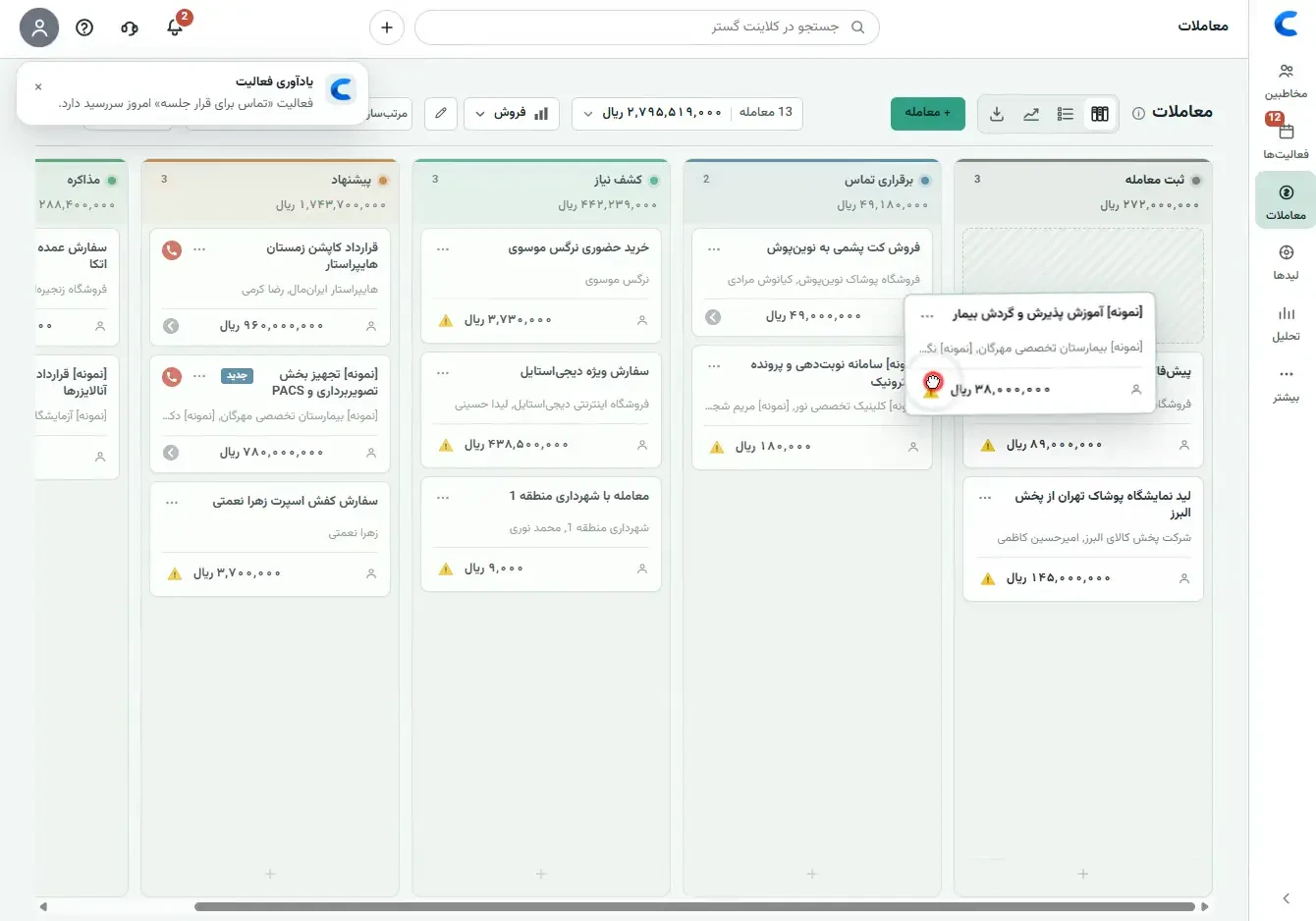
Build a short pipeline for new lines and match stages to real office work. If “issued in the carrier system” is carrier work, keep it as a handoff stage only; rating and policy print stay there.
- Lead: call, referral, website, Instagram, event.
- Needs: line of business, current cover, expiry, decision-maker.
- Quote and compare two or three options.
- Issue / register in the carrier system.
- Deliver documents and explain cover.
- Retain, renew and open a cross-sell opportunity.
Referral and online leads should not die in chat
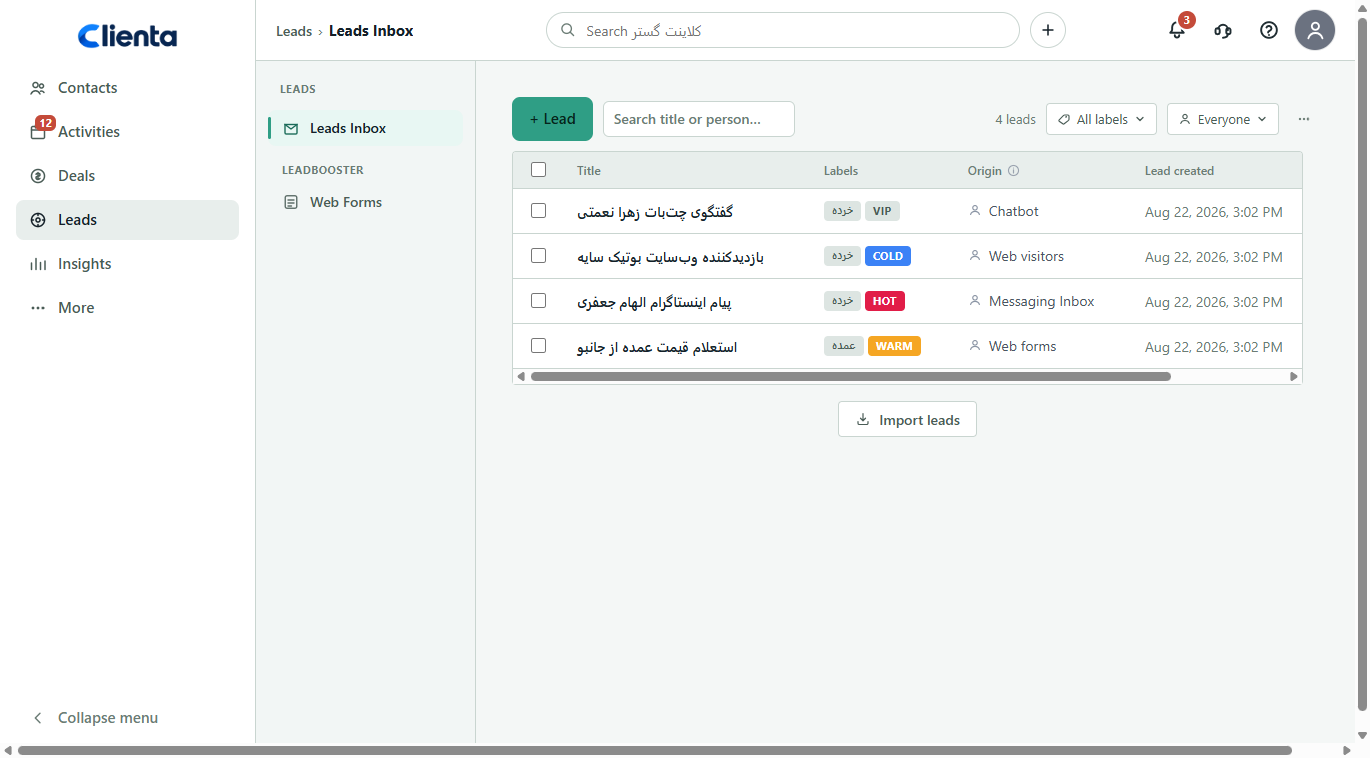
Insurance leads go cold quickly, and today’s buyer often compares online before calling. Every request should reach the lead inbox the same day: source, desired line and agent owner. Connect the website form straight into CRM; log referrals with a clear source so you know which channel brings real policyholders.
A policyholder file, not just a phone number
Keep purchased lines, last-call outcome, reasons not to buy, and notes after a claim on the timeline. When the specialist changes or the agent is in the field, a colleague does not rediscover the client from zero. That file is the same context insurance sales playbooks rely on for renewals and cross-sell.
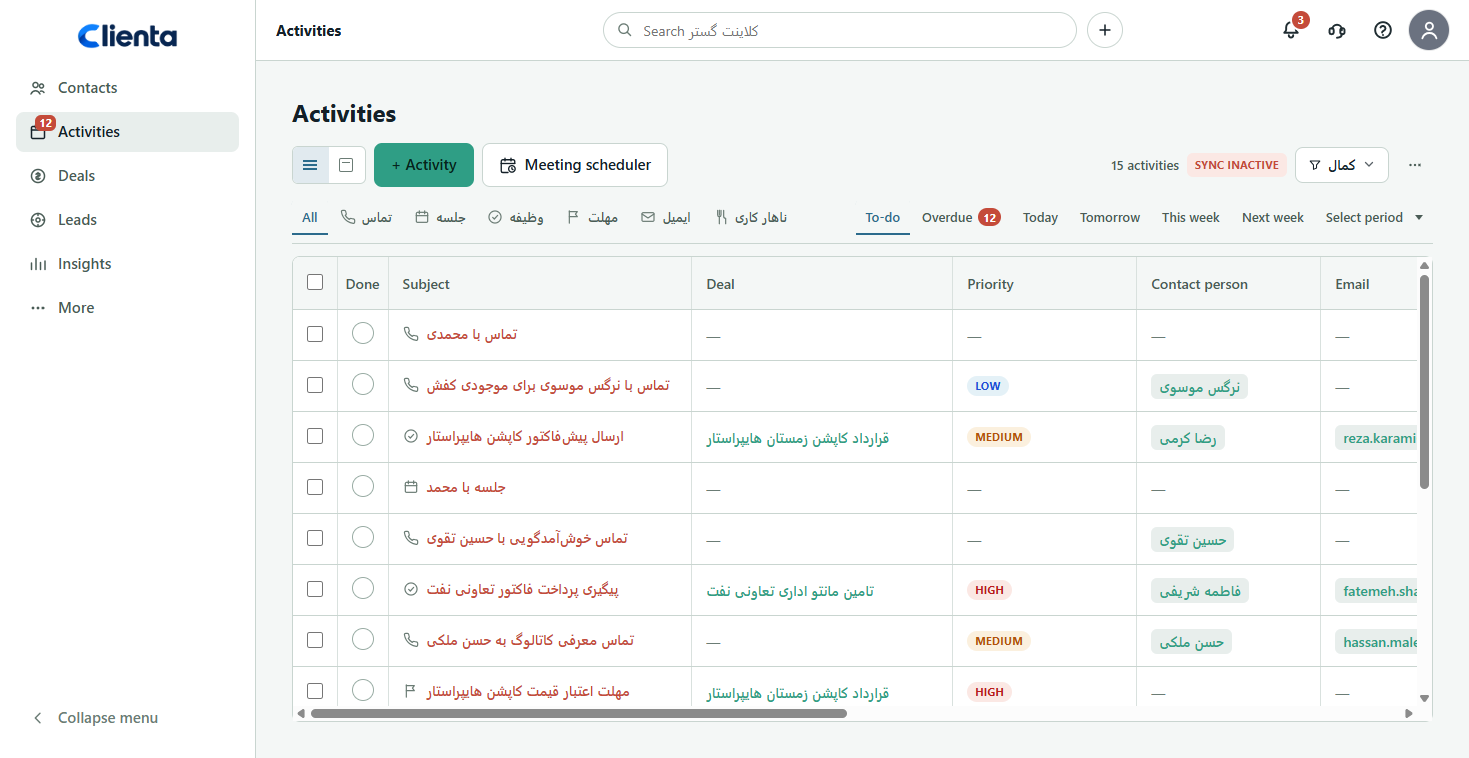
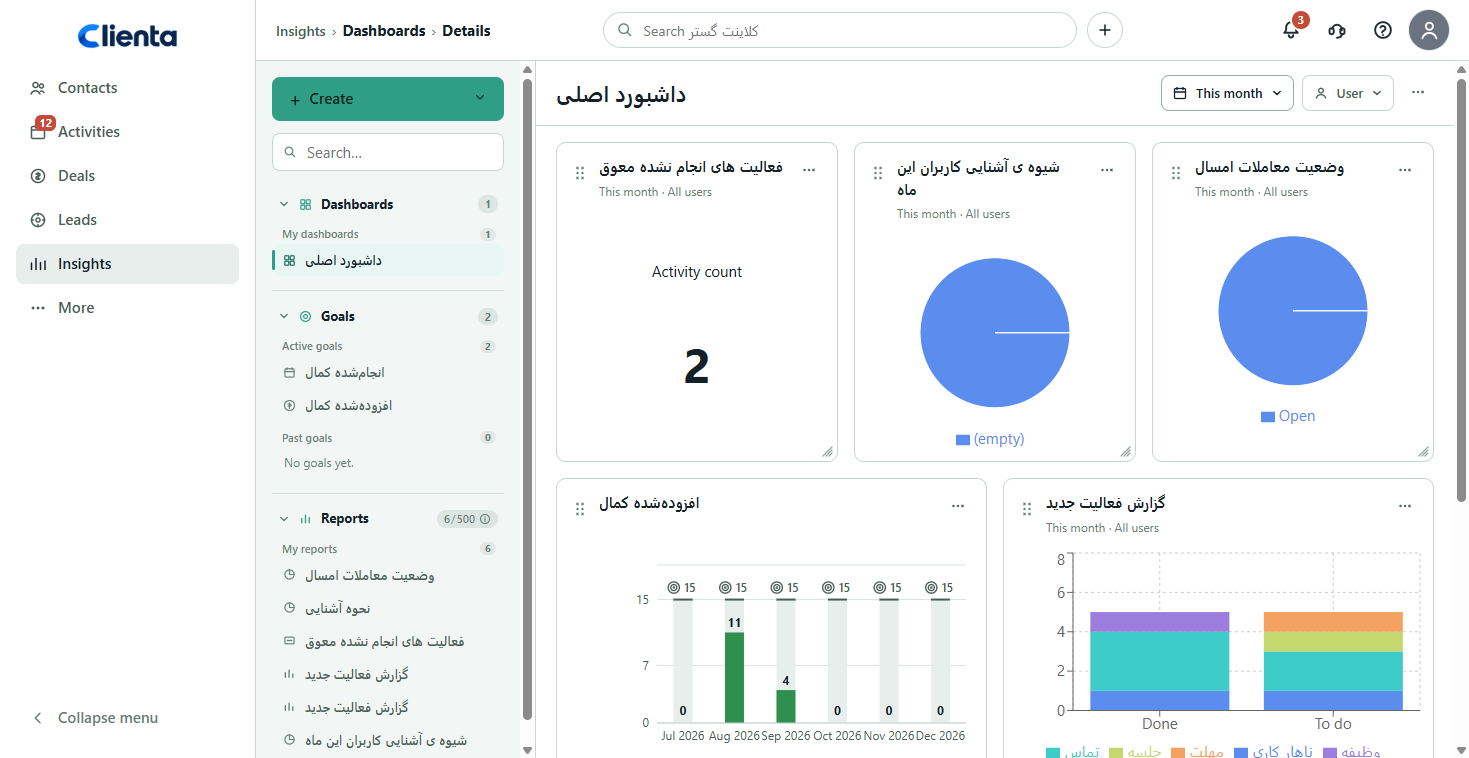
Which lines and channels actually sell
When lead source and pipeline stage are logged, reports show whether referrals convert better than ads, and which agent closes more renewals. Run the weekly meeting on system data, not an end-of-day verbal report.
What insurance CRM is not
Clienta is not a policy issuing system, a carrier rating engine, an actuarial tool, an insurer online sales panel, or a specialised claims and complex commission platform. Issuing and rates stay with the carrier; Clienta organises the relationship, sales follow-up, renewals and cross-sell context. If you only need an issuing tool, sales CRM is the wrong product.
Start with the warm 90-day book
Import policyholders expiring in the next 90 days first and create a renewal activity for each. Keep the new-business pipeline separate. Set a simple rule: no expiry without an owner and a next action. A 14-day trial is enough to see whether renewals move on the system; then add new leads and cross-sell.