
Solution for enterprise sales
CRM software for manufacturing and industrial companies
Factory, equipment and industrial product sales often take weeks or months: RFQ, technical review, proforma, buying committee and commercial negotiation. If that path lives in WhatsApp, email and Excel, the forecast is a guess — and when the rep leaves, the deal restarts from zero. Manufacturing CRM makes the B2B pipeline visible, assigns an owner and next action, and can connect to accounting after a win — it does not replace MRP, BOM or production.
The real pain of Iranian industrial B2B sales
The RFQ is in a salesperson’s WhatsApp, the proforma is in commercial email, the post-exhibition chase is in a notebook, and the buyer’s decision-makers are scattered. When the account goes quiet for two weeks, nobody owns the next call. Loss reasons are not logged, so the next quote repeats the same miss. At month-end a manager asks “what will we close?” and the answer is memory.
Searches for “manufacturing CRM” or “industrial CRM” usually mix two layers: selling and negotiating with the buyer; and production planning and inventory. Clienta is the sales layer. Keep production, costing and stock in ERP or Sepidar.
- Long cycles die without an owner and a next action.
- Several decision-makers, no shared history.
- Proforma versions and loss reasons live in personal email.
- The forecast is a guess; stalled deals pollute the pipeline.
- Sales is detached from finance; invoices are retyped after the win.
A B2B pipeline from RFQ to order
Match stages to commercial work, not to the shop floor. Industrial sales guides stress entry/exit criteria per stage and a next action with a date on every open deal. If “produced” or “in stock” is operations work, keep it out of the sales pipeline.
- Lead: exhibition, website, distributor, referral, inbound RFQ.
- Qualification: volume, credit, product fit, budget and decision-maker.
- RFQ / technical discovery (and a reasoned “no quote” when needed).
- Quote / proforma and revisions.
- Negotiation, payment terms and buyer approval.
- Won and handoff to finance or delivery — without stuffing MRP into the funnel.
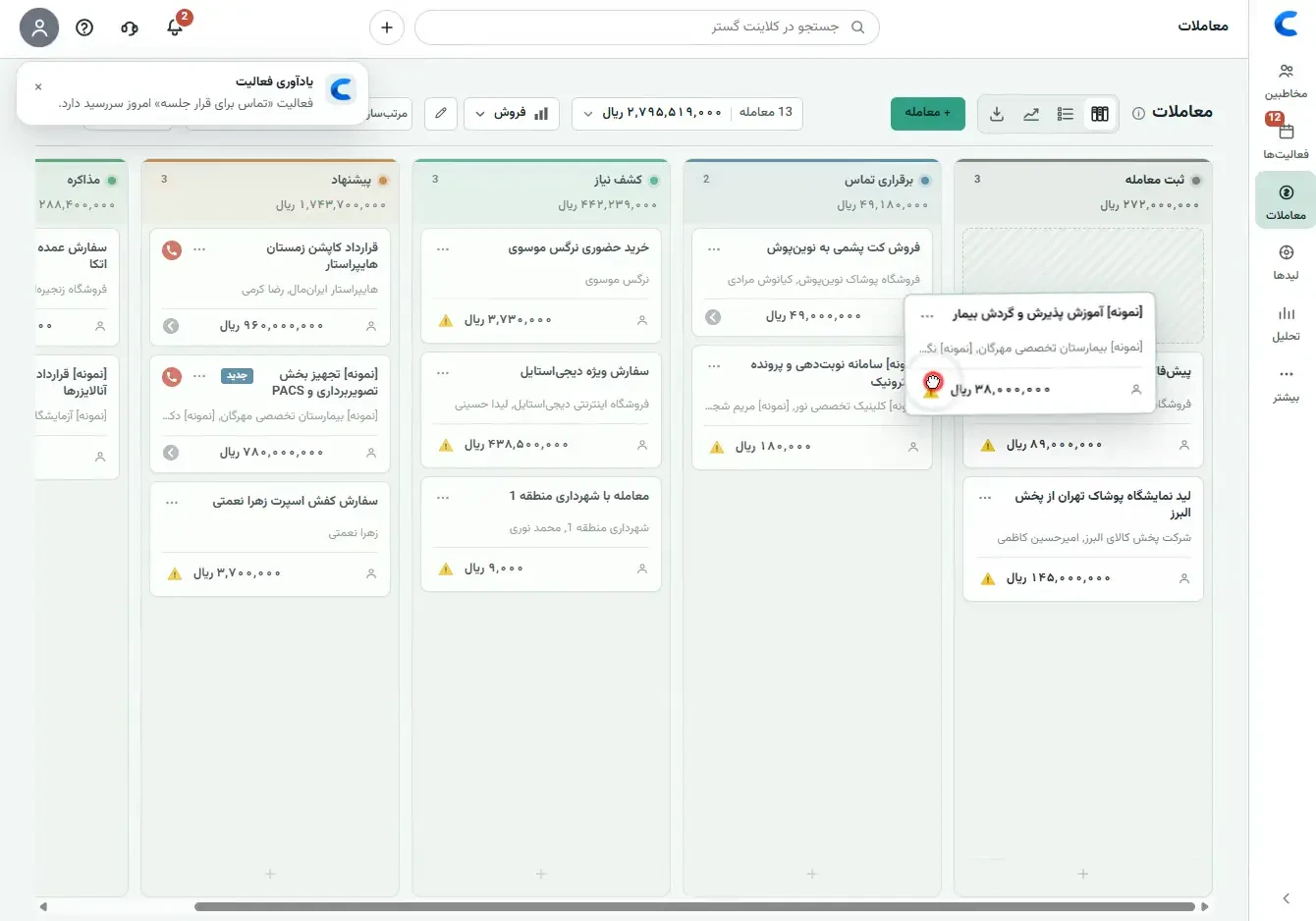
A proforma without follow-up burns capacity
In manufacturing sales, sending a quote is not the end; the buyer compares and revisions arrive. Keep amount, validity date, version and the next call on the deal. Light automation for unanswered quotes or stalled deals keeps hot RFQs from going cold. If an RFQ is out of capability or has no budget, close it as “no quote” with a reason so the pipeline stays clean.
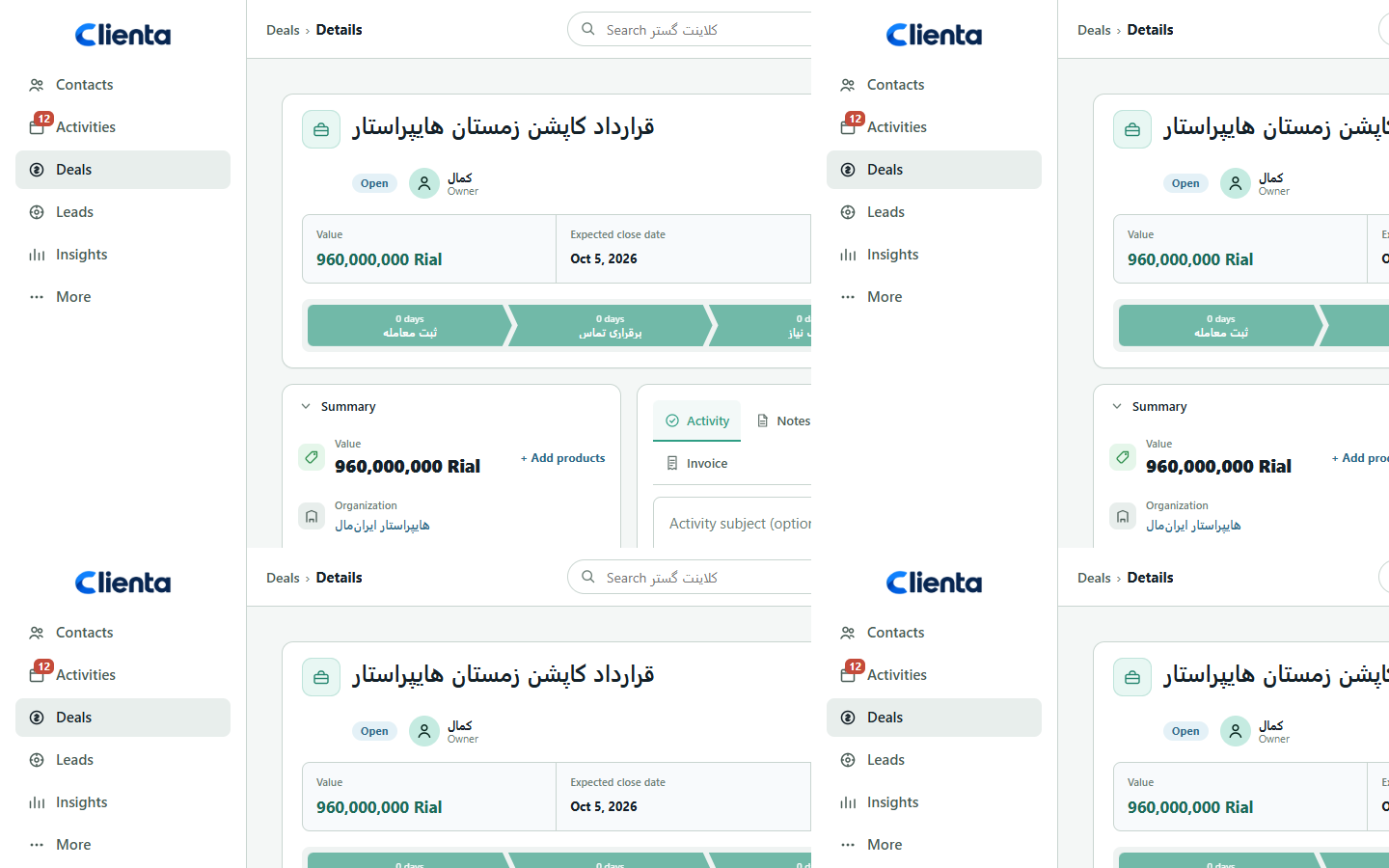
Buying committees and negotiation history must outlive the person
Enterprise deals have several stakeholders: technical, procurement, finance. Keep calls, meetings, promises and quote versions on the record so a new rep does not rediscover the account from zero. That same shared history is what protects long B2B cycles from lost follow-up.
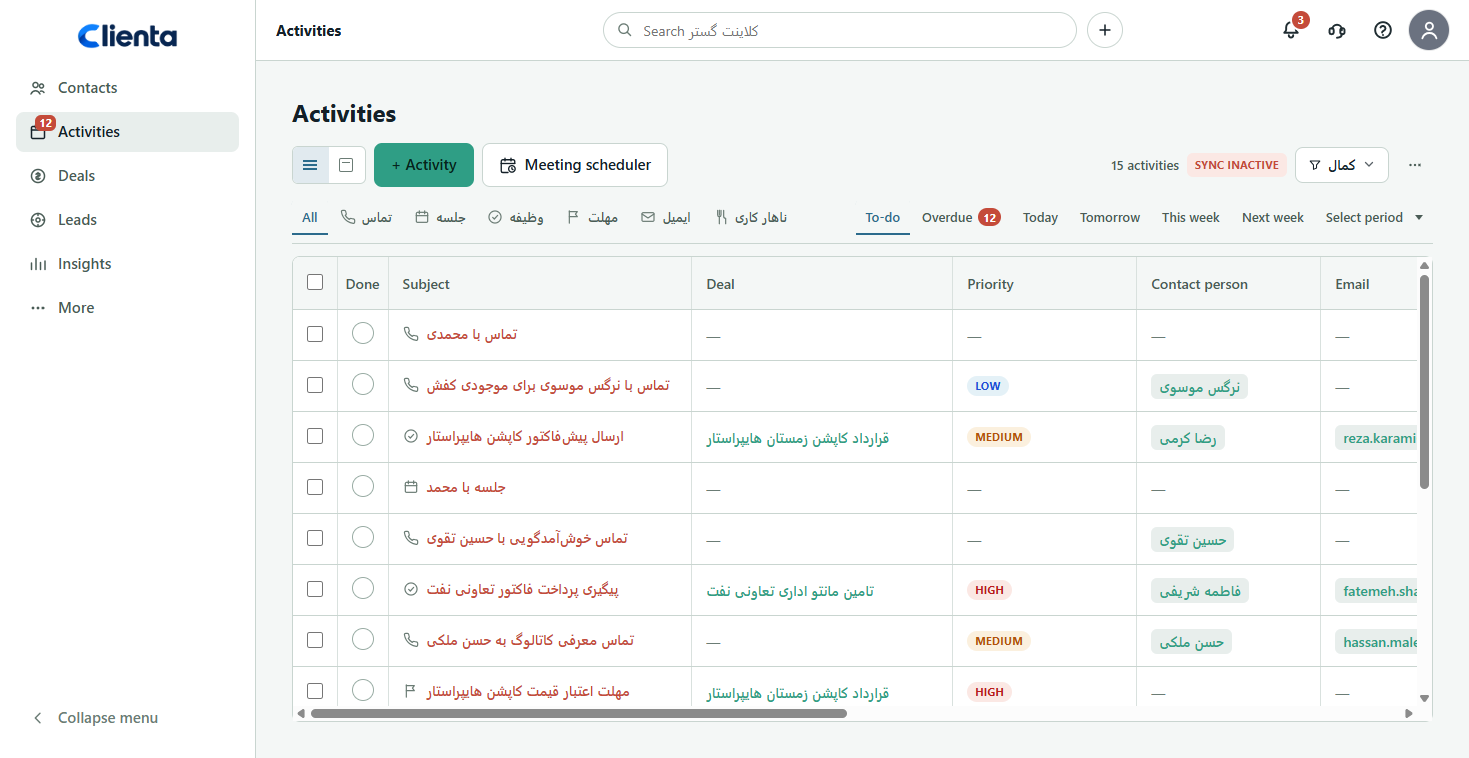
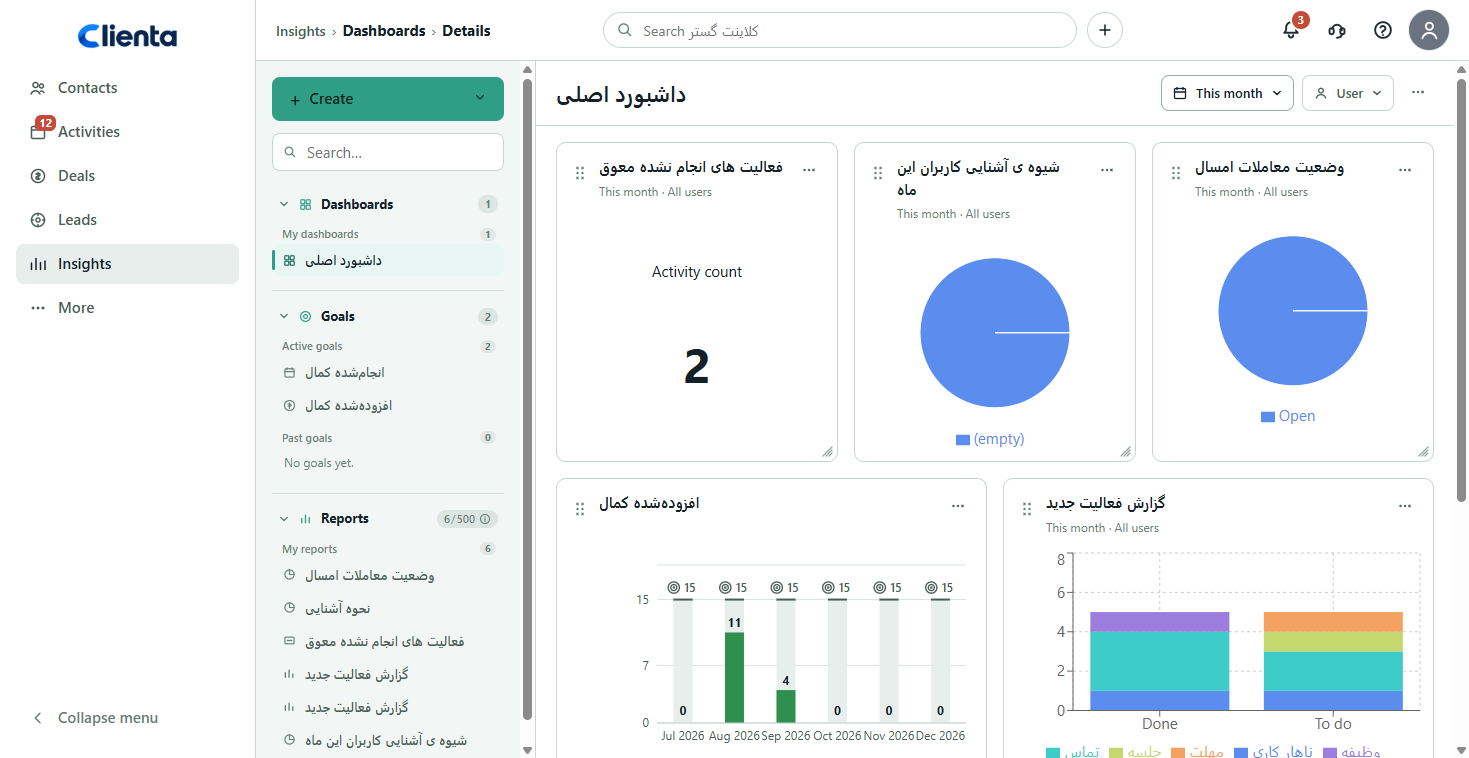
Forecast from the pipeline, not a verbal report
When stage and value are current, reports show which RFQ is stuck, who is overloaded and where the funnel is inflated. Clear three-month silent deals or attach a reason; dirty data ruins the forecast. Run the sales meeting only on the system.
After a win, do not keep finance separate
Many Iranian manufacturers keep accounting, formal proformas and invoices in Sepidar or Hesabfa. Clienta is built for that handoff: negotiation and pipeline run in CRM; parties and financial documents stay in accounting so nothing is retyped.
What manufacturing CRM is not
Production planning, BOM and recipes, warehouse stock, quality, MRP and costing belong to ERP or a manufacturing suite. Clienta is not shop-floor order-taking, van-sales distribution or a factory pricing engine. If the factory is the real gap, finish that system first and keep CRM for commercial teams and the buyer relationship.
Pilot one product line or one region
Import open deals for that line, ban RFQs without an owner and next action, and run the sales meeting only from the system for two weeks. A 14-day trial is enough to see whether forecasting leaves people’s heads; then add other lines and the finance connection.